

Energy bills to fall in April after charges shake-up
Energy bills are expected to decrease in April following a government-led restructuring of costs, with precise details of the reduction to be announced soon.
Almost all households across England, Wales, and Scotland will experience a reduction regardless of their tariff type, although the exact savings will vary between households.
Energy regulator Ofgem is due to publish its updated price cap imminently. Current forecasts indicate that households on variable tariffs could see their bills reduced by approximately 7%.
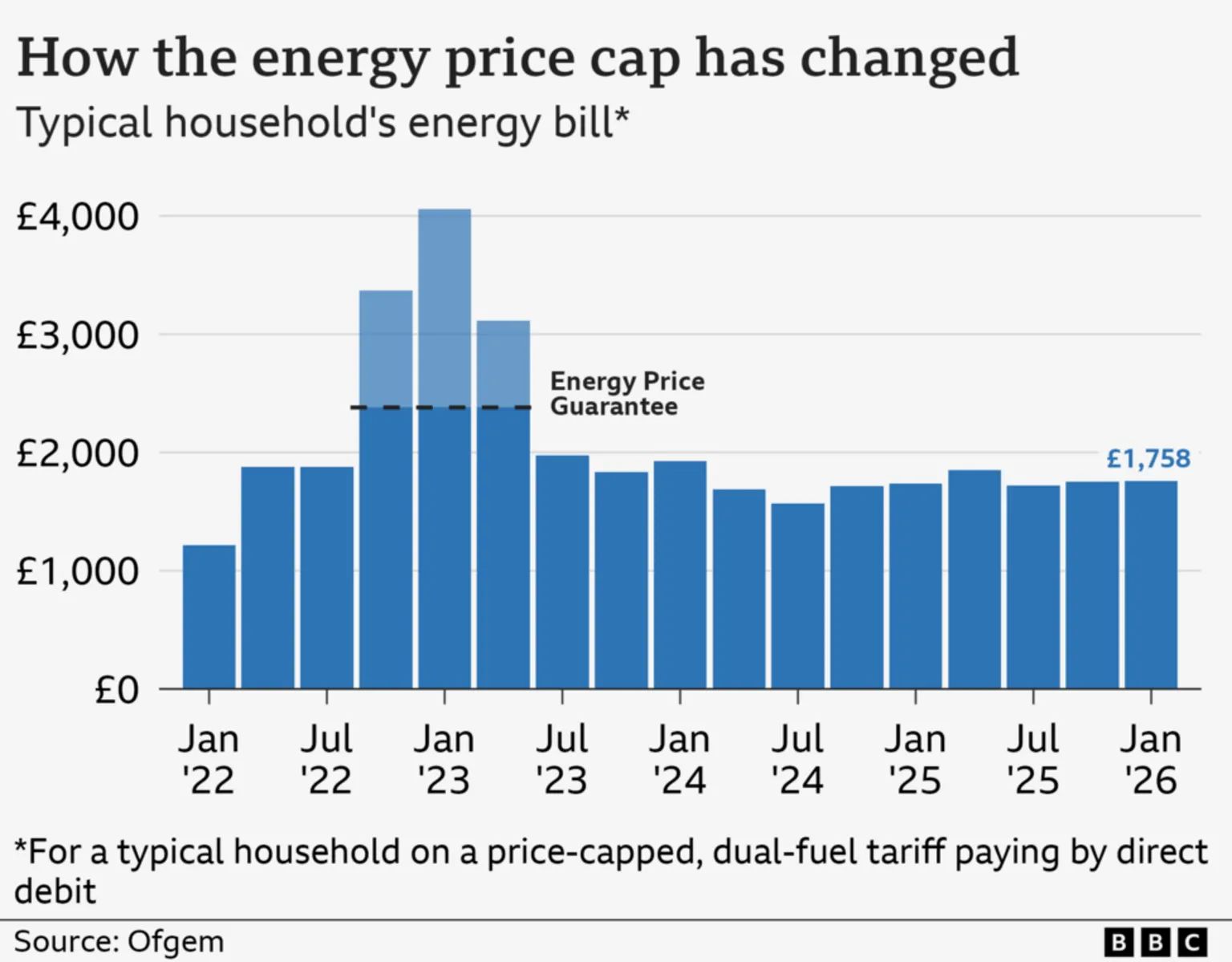
Despite this anticipated decrease, energy prices remain high compared to historical levels, household energy debts have increased significantly, and consumers are encouraged to compare deals to secure additional savings.
Budget promise to reduce bills
Domestic gas and electricity bills consist of a complex combination of charges related to energy policy, network operation costs, and the wholesale price of gas and electricity used in homes.
In the November Budget, Chancellor Rachel Reeves announced reforms targeting the policy cost component.
She stated that the average annual household energy bill would reduce by £150 through the elimination of the Energy Company Obligation (Eco) scheme, which was introduced under the Conservative government, and by shifting some charges onto general taxation.
However, the expenses associated with maintaining and upgrading energy networks—including power lines, cables, and gas pipelines—are increasing.
Analysts at consultancy Cornwall Insight have projected that a household with typical gas and electricity consumption will see its annual bill decrease by £117, reaching £1,641 in April.
A similar reduction was observed last summer, although prices have risen since then. The official announcement regarding April bills will be made at 07:00 GMT on Wednesday.

The size of the discount on individual household energy bills will depend on household size, type, and energy usage.
The reduction is expected to be mainly applied through a lower price per unit of electricity consumed. Consequently, households with high electricity usage—potentially including vulnerable groups relying on medical equipment—are likely to benefit the most. Conversely, those using minimal electricity but significant gas will see smaller savings.
Ofgem's updated price cap will affect millions of households on variable tariffs.
Additionally, changes to policy costs will lead to bill reductions for customers on fixed tariffs. Suppliers will contact these customers in the coming weeks with details about specific tariff adjustments.
The wholesale cost of gas, which surged following Russia's invasion of Ukraine four years ago and contributed to soaring household bills, remains volatile and difficult to predict.
This volatility complicates forecasts for domestic energy bills later in the year, though Cornwall Insight anticipates relatively minor changes.
Regulators and consumer advocates have urged people to shop around for cheaper fixed deals based on their individual circumstances.
Richard Neudegg, director of regulation at Uswitch, said: "While it is good news that the price cap is coming down, consumers should not be fooled into thinking that it is a good deal. By moving into a competitive fixed deal, consumers could save £200 [a year] as well as get the benefit of these government changes."
Cost of living pressure
Although energy bills will fall in April, other household expenses are expected to rise, meaning most people will continue to face financial pressure.
Water bills are set to increase sharply in some regions, council tax will rise, and various other household costs will also go up. Some larger families will receive increased universal credit payments following the removal of the two-child benefit cap.
Many households struggling financially have fallen behind on energy payments, resulting in a collective debt to suppliers exceeding £4 billion.
Dhara Vyas, chief executive of Energy UK, which represents suppliers, said companies can help. "They are giving them different tariffs, extra help and support, offer white goods such as efficient fridges, but they can only do this if they know who is in your household and what your circumstances are," she said.


