

ECB raises eurozone interest rates by 25 basis points
The European Central Bank (ECB) has increased borrowing costs across the eurozone for the first time since September 2023. The ECB’s governing council voted to raise interest rates by 0.25 percentage points.
This decision follows a rise in eurozone inflation to 3.2% last month, driven in part by increased energy costs linked to the Middle East crisis.
In announcing the rate hike, the ECB stated:
"The war in the Middle East is generating inflation pressures, and the decision to raise rates is robust across a range of scenarios mapping out how the shock might evolve and affect the medium-term outlook for the euro area."
The ECB increased the rate on its deposit facility, used by banks for overnight deposits with the Eurosystem, from 2% to 2.25%. The interest rate on the ECB’s main refinancing operations, which commercial banks use to borrow funds, rose from 2.15% to 2.4%. Additionally, the rate on the marginal lending facility, which offers overnight credit to banks, increased from 2.4% to 2.65%.
Lagarde: decision was unanimous
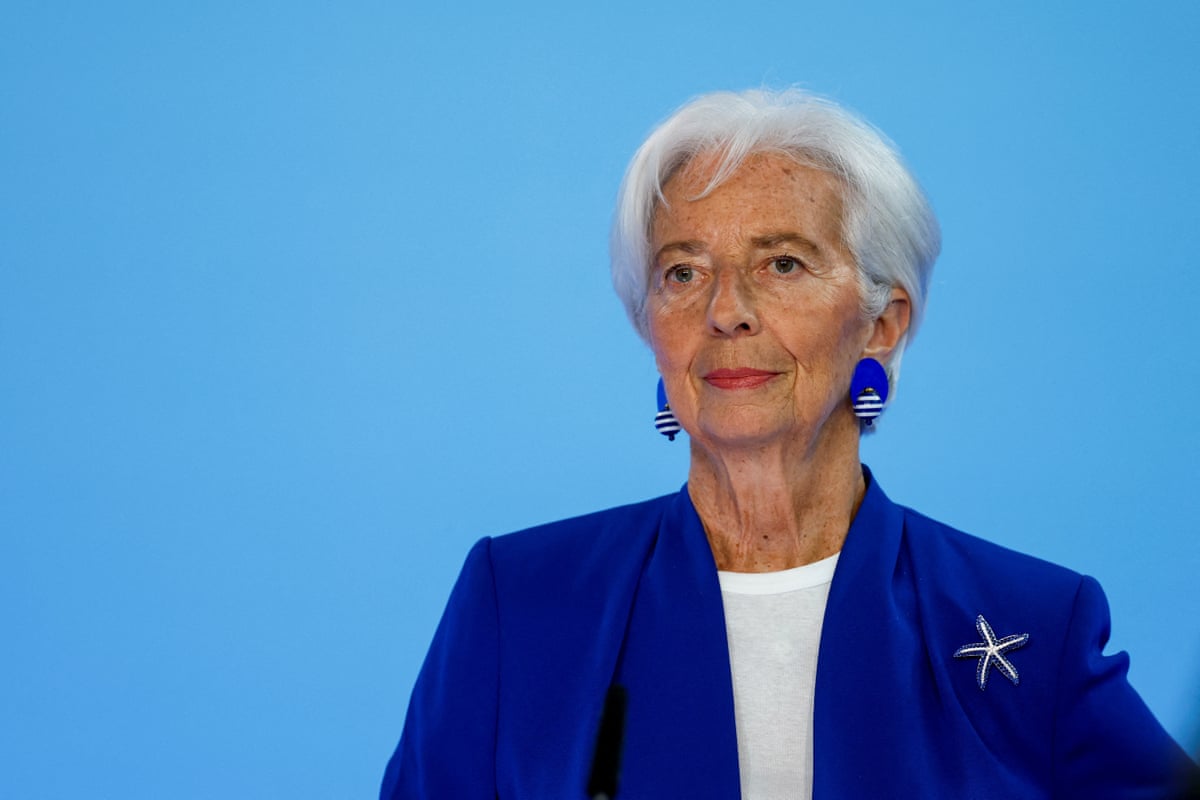
When asked whether the ECB’s governing council considered holding rates or implementing a larger increase, ECB President Christine Lagarde, who was noted to be wearing a starfish brooch, confirmed that the decision to raise rates by 25 basis points was unanimous and based on the latest forecasts from ECB economists.
"The decision that we took today to raise, by 25 basis points, our three interest rates was a unanimous decision without reservation. We did not discuss or debate any other alternative proposal."
Lagarde: The risks to the growth outlook are to the downside, due to Middle East war
Lagarde cautioned that the ongoing conflict in Iran poses risks to the eurozone’s growth outlook. She stated that the main downside risks stem from the war in the Middle East, which has contributed to a volatile global policy environment. Prolonged disruptions to energy supplies could further increase energy prices beyond current expectations.
She warned that these factors could reduce real incomes and discourage investment and spending by firms and households. The situation could deteriorate if European companies face supply chain disruptions leading to shortages.
"The drag on growth would intensify if the closure of major shipping routes were to cause acute shortages of key inputs that forced euro area firms to curtail output. A worsening of global financial market sentiment, or a tighter supply of credit, could dampen demand. Additional frictions in international trade could also further disrupt supply chains, reduce exports, and weaken consumption and investment."
Regarding the economic situation, Lagarde noted that the euro area economy grew in the first quarter when adjusting for a temporary factor in Ireland. Ireland’s GDP shrank by 12% in the last quarter due to a decline in activity at multinational companies, which pulled the eurozone into an official contraction in the first three months of 2026. However, excluding Ireland’s GDP, the economic picture is more positive, as GDP is not an ideal measure of Ireland’s economy.
Lagarde emphasized that the ECB is not pre-committing to a specific rate path.
"In particular, our interest rate decisions will be based on our assessment of inflation outlook and the risks surrounding it, in light of the incoming economic and financial data, as well as the dynamics of underlying inflation and the strength of monetary policy transmission."
She further highlighted the uncertainty in the eurozone outlook, with upside risks for inflation and downside risks for growth.
"The full implication of the war for medium term inflation and growth will depend on the intensity and duration of the energy price shock, as well as the scale of its indirect and second round effects."
Lagarde: The war in the Middle East is generating inflation pressures
During a press conference in Frankfurt, Germany, ECB President Christine Lagarde explained the rationale behind the interest rate hike.
She began by noting that the Iran war is contributing to inflation pressures in the euro area.
"The Governing Council is committed to setting monetary policy to ensure that inflation stabilises at our 2% target in the medium term. In line with this commitment, we today decided to raise the three key ECB interest rates by 25 basis points. The war in the Middle East is generating inflation pressures, and the decision to raise rates is robust across a range of scenarios, mapping out how the shock might evolve and affect the medium term outlook for the euro area."
Lagarde also outlined that ECB economists have revised upward their inflation forecasts and lowered their growth projections.

Thomas Pugh, chief economist at RSM UK, commented on the rate hike:
"As expected, the ECB hiked rates by 25bps today. The next move will depend on how energy prices evolve over the summer, but the risks are clearly skewed to another rate hike later this year. However, a weaker labour market and soft economy will limit second-round effects and reduce the need for further tightening.
Given inflation has already jumped to 3.2% in May and there is growing evidence of further inflation in the pipeline with PPI surging from -3.0% in February to 4.9% in April, today’s rate hike was inevitable. In addition, the updated forecasts show the ECB expects core inflation to average 2.5% this year and next, up from 2.3% and 2.2% respectively."
This rate hike makes the ECB the first G7 central bank to raise interest rates in response to the Iran war. The US Federal Reserve, Bank of England, and Bank of Japan are all scheduled to meet next week. The Bank of Japan is expected to raise rates, while the Bank of England and the Federal Reserve likely will not.
Eurozone growth forecasts lowered
The ECB has revised down its growth forecasts for the euro area. The baseline projections now indicate economic growth averaging 0.8% in 2026, 1.2% in 2027, and 1.5% in 2028.
"This is a downward revision for 2026 and 2027, reflecting a more pronounced impact of the war on commodity markets, real incomes and confidence."
In March, the ECB had forecast growth of 0.9% in 2026, 1.3% in 2027, and 1.4% in 2028.
ECB raises inflation forecast
The ECB has also increased its inflation forecasts due to the effects of the Iran war on energy prices. Headline inflation is now expected to average 3.0% in 2026, 2.3% in 2027, and 2.0% in 2028.
Previously, in March, inflation was forecast at 2.6% in 2026, 2.0% in 2027, and 2.1% in 2028.
"Compared with March, staff have revised up their baseline projection for inflation in 2026 and 2027 owing to a higher path for energy prices, which, to some extent, is expected to feed into food, goods and services inflation."
ECB expected to raise interest rates shortly
The eurozone is preparing for its first interest rate increase since 2023, as the ECB aims to address inflationary pressures stemming from the Iran war. The ECB is expected to raise rates by 0.25 percentage points to counter inflation, which rose to 3.2% in May, exceeding the ECB’s 2% target.
Kathleen Brooks, research director at XTB, commented on the potential risks:
"The fear is that the ECB could make the same mistake as it did in 2011, when it hiked rates right before the sovereign debt crisis. Today’s hike could exacerbate the growth issues in the currency bloc, and that could weigh on the ECB’s credibility, something that [ECB president Christine] Lagarde and co will want to avoid.
There is a growing chorus that this rate hike won’t bring down inflation, which is caused by an international energy supply crunch. Due to this, Lagarde may want to deliver as neutral a message as possible later today, and the bar is high for Lagarde to deliver a hawkish surprise."
The ECB’s decision was scheduled for 2:15 pm in Frankfurt (1:15 pm UK time), followed by a press conference 30 minutes later.
Impact on airline sector: Wizz Air reports profit slump
In the airline sector, Wizz Air reported a significant decline in profits attributed to the Iran war’s impact on earnings. The airline’s operating profits fell by 16.6% to $139.7 million for the year ending 31 March, while net profits decreased by over 99%, despite a 10% increase in passenger numbers compared to the previous year.
Wizz Air informed shareholders that it faced several "one-off headwinds" during the past year, including the forced cancellation of Tel Aviv and other Middle East routes during the 2025 peak summer period, as well as cancellations of Middle East and Cyprus routes in March 2026.
The Iran conflict in March 2026 reduced earnings by €50 million, although this impact was largely mitigated by fuel hedges established before the conflict.
Due to ongoing uncertainty about the conflict and the closure of the Strait of Hormuz, Wizz Air declined to provide forecasts for the current year. Despite these challenges, the company’s shares rose by 6.7% this morning.


