

Introduction: Asian Stocks Decline as US and Iran Exchange Fire
Asian stock markets experienced a significant decline following the largest exchange of fire between Iran and the United States since a ceasefire was established in April. The escalation occurred after former US President Donald Trump accused Tehran of downing a US Army helicopter near the Strait of Hormuz.
In response, Iran launched retaliatory strikes early Wednesday morning, targeting Kuwait, Bahrain, and Jordan, according to Tehran.
Japan’s Nikkei index fell by 2%, while South Korea’s technology-focused Kospi index dropped approximately 6%, despite maintaining a year-to-date gain of over 70%.
Contrary to expectations, oil prices decreased slightly this morning. Brent crude, the international benchmark, declined by 0.2% to $91.28 per barrel.
Jim Reid of Deutsche Bank noted that investors are caught between optimism reminiscent of 1999’s AI enthusiasm and fears similar to the 2000 tech crash.
“On the former, Brent briefly fell below $90 for the first time since April 17th yesterday before partially rebounding after Trump vowed retaliation following Iran shooting down a US helicopter. On the latter, the Philly Semiconductor Index fell by as much as -8.62% intra-day before recovering to -1.93% by the close.”
European stock markets are expected to open with minimal changes: futures for the FTSE 100 indicate a 0.1% decline, while EuroStoxx 50 futures are down by 0.1%.
Meanwhile, new data from China reveals that factory gate prices increased at the fastest pace in four years, driven by a sharp rise in energy costs linked to the conflict in Iran.
The Producer Price Index (PPI) rose 3.9% year-over-year in May, surpassing the 3.8% forecast in a poll and the 2.8% increase recorded in April, according to the National Bureau of Statistics.
This marks the third consecutive monthly increase and the highest growth rate since July 2022.
Economists at Pantheon Macroeconomics attribute the rebound primarily to cost pressures rather than stronger demand.
Kelvin Lam, senior China economist, stated:
“Reflation is expected to continue in the near term due to the lasting impact of the war in Iran on imported energy costs, and of course the fading drag from negative carry-over effect from last year, which most people forget.”
Although oil and gas futures no longer anticipate further escalation in the Middle East, uncertainty remains regarding peace negotiations and the reopening of the Strait of Hormuz. Despite the acceleration in the annual rate, monthly momentum slowed to 0.5% month-over-month from 1.7% the previous month.
This slowdown likely reflects two factors: first, global energy markets no longer expect a broadening conflict, making a $150 per barrel price scenario less probable, with prices retreating from recent highs. Second, China’s subdued domestic demand limits producers’ ability to pass inflation through to factory gate prices.
The Agenda
9am BST: Deadline for the Competition and Markets Authority (CMA) and Ofcom to report to the government on the Telegraph/Mail deal.

1.30pm BST: US inflation data for May, forecasted to rise to 4.2%.
2.15pm BST: Treasury Committee hearing on student loans.
Fuller, Smith & Turner Pubs Prepare for Summer and World Cup
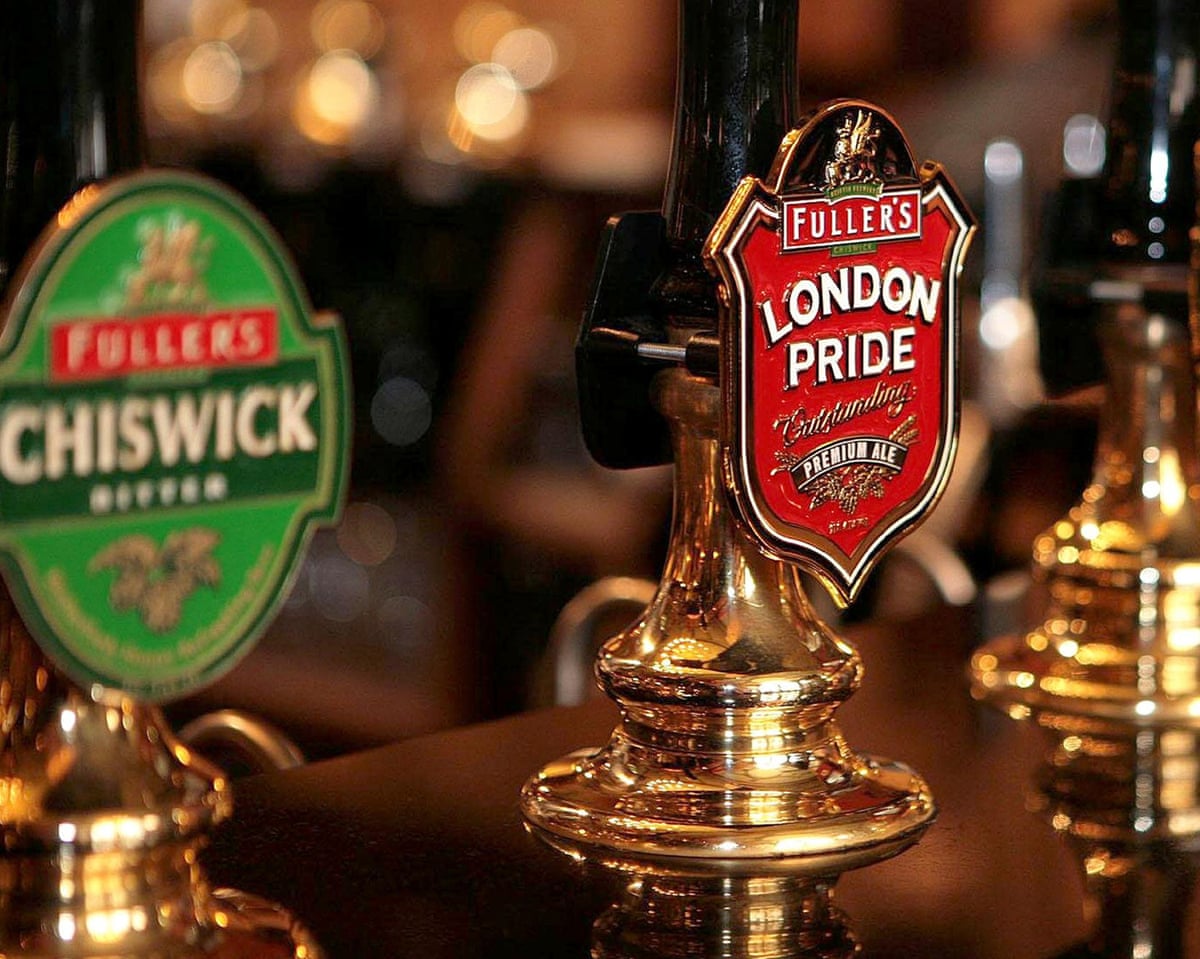
The Fuller, Smith & Turner pub and hotel chain has informed investors that it is "garden-ready" for the summer season and the upcoming World Cup football tournament.
The company reported strong advance bookings for the World Cup and robust demand for staycations, particularly in the Cotswolds region.
Shares rose approximately 7% this morning following better-than-expected annual revenue and profit figures of £398 million and £29.5 million, respectively.
Executive Chair Simon Emeny commented:
“The new financial year has begun well. Like for like sales for the first 10 weeks have risen by 4.4%, building on a strong comparative period last year and our underlying profitability continues to improve, maintaining the momentum we have built in recent years.
As we move into our summer season, preparations have gone well. Our garden investment programme has seen fresh space created for peak trading, advance bookings for the World Cup have been strong, and we are seeing increased demand for staycations benefiting our excellent rooms business.”
WH Smith Shares Plunge Amid Profit Downgrade and Capital Raise
WH Smith’s shares fell sharply by 16% this morning following a disappointing update.
Richard Hunter, head of markets at Interactive Investor, described the situation as deteriorating for the retailer.
“The capital raise comes at a time which will severely test investors’ patience and loyalty to the cause. Indeed, further investment into WH Smith will require something of a leap of faith as weaker consumer confidence has affected spend per passenger, a reduction in flights in the US has impacted airline capacity, while the Middle Eastern conflict has generally disrupted any progress which the group had been making.
…If the previous ‘annus horribilis’ for the group, where an overstated profit forecast led to a sharp decline in the share price and with the CEO unfortunately falling on his sword as a result seemed uncomfortable, matters have now taken a turn in what could be an existential time for the company. The capital raise, if successful, is designed to draw a line under any legacy issues while positioning the group to be underpinned by a stronger balance sheet with the company having less of a reliance on debt to grow.”
WH Smith Seeks £100m to Offset Middle East Impact on Profits
WH Smith announced plans to raise approximately £100 million as the Middle East conflict begins to affect its profitability.
The retailer intends to place up to 26 million shares, representing about 20% of its existing share capital, alongside a separate offer for UK retail investors.
It also lowered its pre-tax profit forecast for the year to a range of £75 million to £90 million, down from £90 million to £105 million, citing reduced passenger numbers and weaker consumer demand in the travel sector. This marks the second profit downgrade this year.
Additionally, the company anticipates a £150 million writedown related to its North American InMotion business review, store exit program, and restructuring efforts globally.
Executive Chair Leo Quinn stated:
“The business has a strong core and operates in attractive markets with ample scope for profit expansion, particularly in North America. However, we need much greater capital discipline and a laser focus on returns. In recent years, the outcomes from certain acquired businesses and contract obligations have been very disappointing. Our priorities are to build an efficient and effective foundation for WHSmith and use this to drive a growth strategy managed for profitability.
…There is no doubt that current economic uncertainty and its effect on consumer appetite for spending has created headwinds. In this environment, sorting legacy issues while investing in the core model requires the financial flexibility of a stronger balance sheet in lock-step with self-help. This placing is a prudent and proactive step to accelerate our transformation of what is, at heart, a good business with some great people and clear opportunity for profitable growth.”
WH Smith shares have declined by about 21% year-to-date.
Susannah Streeter of Wealth Club noted that the renewed Middle East conflict has diminished market optimism, with the upcoming US inflation data expected to be a key focus.
“The CPI numbers are set to show another painful rise in costs for consumers, who are already grappling with sharp increases in the costs of everyday goods.
The expectation is that the headline rate will rise to 4.2% year-on-year with a 0.5% jump in May. The big concern is that elevated wholesale energy costs are spreading and settling into the broader economy. The latest attacks in the Middle East indicate that the conflict is entrenched and increasingly hard to solve.”


