

Industry Consolidation Expected as UK EV Charger Firms Seek Buyers
British electric vehicle (EV) charging companies are actively seeking acquisition by competitors as they face cash shortages driven by rising operational costs and intense market competition, according to industry leaders.
A significant wave of mergers and acquisitions is anticipated to reduce the number of charge point operators in the UK from over 150 to a concentrated market dominated by five or six major players. This outlook was provided by Asif Ghafoor, co-founder of Be.EV, a charging company supported by Octopus Energy.
During the pandemic, investors and the electric car sector experienced rapid growth, supported by low borrowing costs. However, with increasing inflation, interest rates, and supply chain challenges, several charger companies are now facing liquidity issues, while investors seek returns on their investments, industry sources report.
Simon Smith, chief executive of Voltempo, which specializes in charge points for lorries, stated: "Charging is getting more capital intensive and more competitive at the same time. That means two things decide who survives: the right sites and fast utilisation. If volumes do not ramp [up], payback stretches, assets get stranded and consolidation follows. That is just infrastructure market logic."
The number of EV chargers installed across the UK has surged as companies compete for market share. By the end of 2025, there were nearly 88,000 charge points across 45,000 locations nationwide, according to data from Zapmap.
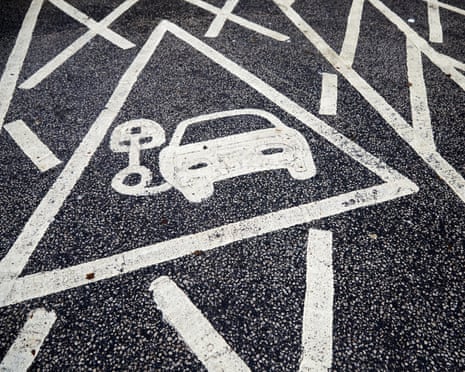
While many charge point operators are profitable, others have installed infrastructure in anticipation of future demand, resulting in insufficient current revenues to cover costs. Nonetheless, these operators expect profitability to improve as EV adoption increases.

Ghafoor noted that numerous unnamed companies have approached Be.EV seeking buyers.
"Companies are running out of money," he said. "This is a very crowded space. We’ve got too many operators. All of these businesses are going to come together … That consolidation will allow investment and that scale."
Acquiring companies may pursue takeovers to achieve economies of scale, such as maintaining the same number of back-office staff while managing more charge points, negotiating larger and more cost-effective nationwide contracts, and leveraging bulk purchasing power.
The largest UK EV charging network is owned by the oil company Shell, followed by the government-backed Connected Kerb and EDF-owned Pod Point. The market also includes competitors such as Sainsbury’s supermarkets, fossil fuel companies BP and Total, Scottish car retailer Arnold Clark, and automotive manufacturers BMW, Ford, Hyundai, Mercedes-Benz, and Volkswagen, which supports the Ionity network.
Ghafoor remarked, "If you look at any of these markets, typically what you see is everyone wakes up and says, ‘I’ll have a go’. EV charging has been the widest ‘I’ll have a go’ sector I’ve been involved in."
The competitive environment has compelled smaller operators to focus on niche markets where profitability is attainable. Be.EV, which operates 2,500 chargers, concentrates on ultra-rapid charging at high-traffic locations such as retail parks and coffee shops. Backed by £110 million from Octopus Energy, Be.EV is also pursuing acquisitions of smaller firms. Voltempo installs chargers for lorries, whose owners have predictable demand and can rent out their chargers to third parties.
The timing of the pandemic-era investment surge may be contributing to current pressures on charge point operators. Some private equity (PE) and venture capital investors typically seek to realize returns within five years. Ghafoor observed that
"the PE cycle – flip within five years – that probably creates more pressure"on charging companies struggling to achieve profitability.


