

Historic Starship Launch Signals New Era for SpaceX
It is 07:25 am on 13 October 2024 at Starbase, near Boca Chica on the Texas side of the US/Mexico border. On the launch pad stands the largest rocket ever constructed. Its engines ignite, propelling it skyward over the Gulf of Mexico amid cheers and excitement in the SpaceX control room.
However, the launch itself is only the beginning. The rocket’s return will mark a significant milestone in space exploration.
Seven minutes after liftoff, the massive booster begins its descent back to Earth. As planned, its engines reignite to decelerate and guide it with remarkable precision toward a mechanical capture device known as Mechazilla, or "the chopsticks." Engineers successfully achieve a feat never before accomplished.
Amid celebrations in the control room, Elon Musk shares with his millions of social media followers that this represents a "big step towards making life multiplanetary" — a reusable rocket designed to dramatically reduce the cost of launching payloads into orbit, to the Moon, and eventually Mars.
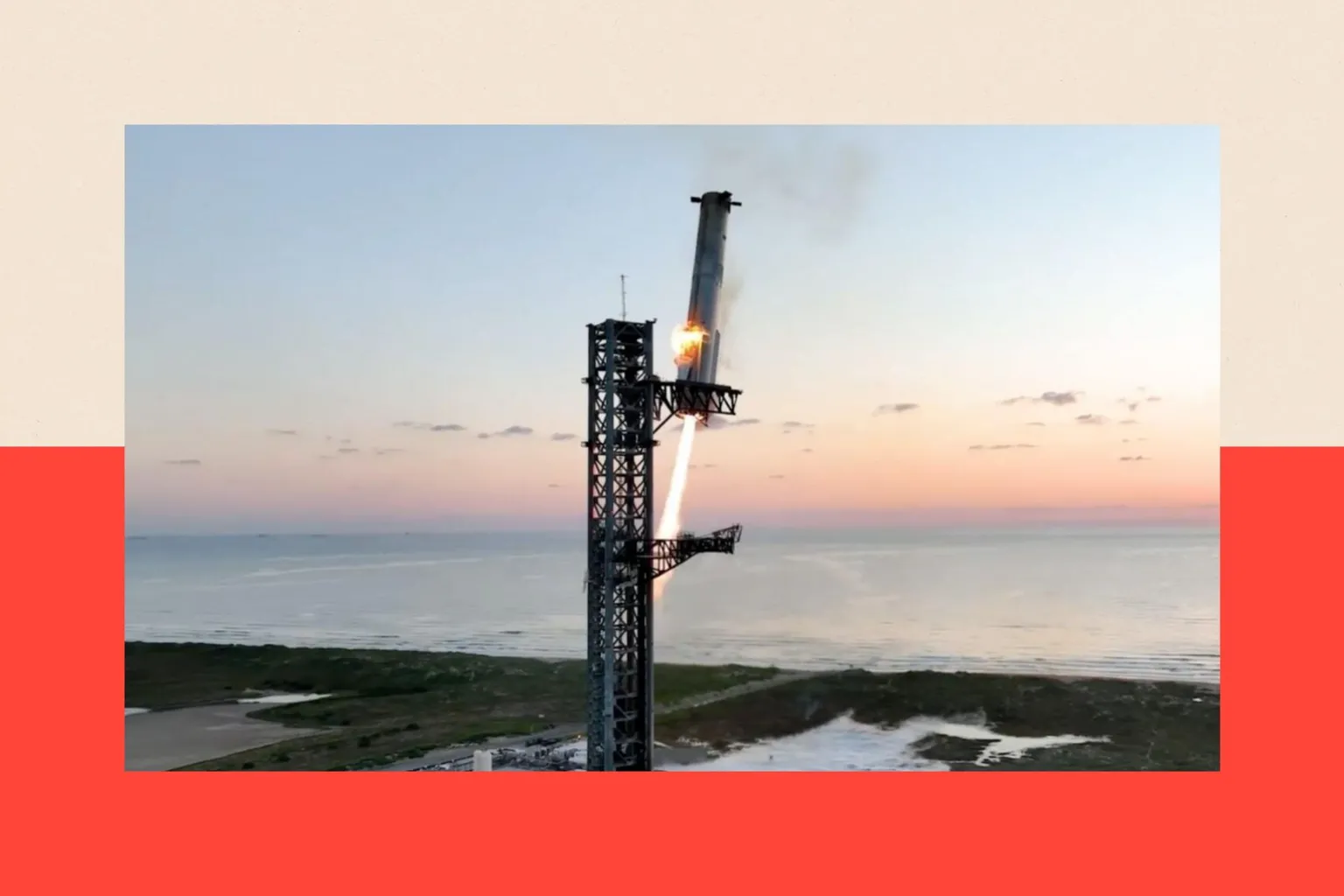
SpaceX, a company with a futuristic vision led by a figure often described as a maverick genius, has drawn comparisons to Tony Stark, the fictional leader of Stark Industries and Marvel’s Iron Man.
On 12 June, trading will commence for a portion of SpaceX shares, previously accessible only to Musk and select wealthy private investors.
Interest among UK investors has surged, with several stockbrokers informing the BBC of heightened demand for the opportunity to purchase shares in this captivating company, controlled by a charismatic individual who has captured global imagination. UK retail investors are expected to be allocated approximately £1.5bn worth of shares, and one of the UK’s leading investment platforms anticipates this may inspire a new generation of investors.
Simon Belsham, Chief Client Officer at Hargreaves Lansdown, stated:
"While we recognise this IPO might not be right for everyone, it's an exciting moment for many of our clients. We're expecting this might be a first foray into investing for many."
Even those who do not directly purchase shares may soon become part-owners of SpaceX through pension funds and retirement savings invested in equities, as is common for most pension plans. This means many will indirectly own a company situated at the intersection of technology and geopolitics, and as Musk envisions, the future of humanity.
The opportunity for ordinary investors to acquire SpaceX shares represents one of the most significant moments in stock market history and is imminent. It is also expected to elevate Elon Musk to become the world’s first trillionaire.
The prospectus for SpaceX shares opens with a modest mission statement:
"To build the systems and technologies necessary to make life multiplanetary, to understand the true nature of the universe and to extend the light of consciousness to the stars."
However, SpaceX is not solely about rockets — in fact, rockets are not even its primary focus. The company is a strategic bet on the future of artificial intelligence (AI). The success or failure of its upcoming partial public offering will serve as a critical test of investor optimism — and skepticism — regarding AI’s potential to transform large segments of the global economy.
The increasing concentration of power within a few US mega-corporations also raises important questions about the interplay of business, economics, and politics on Earth. Many view this moment as Musk’s Icarus moment — a potential overreach driven by ego. Economist Sinead O'Sullivan, who has worked with NASA, commented:
"I think it's an Elon Musk ego project."
So, should the public welcome joining Musk on his ambitious cosmic journey?
A Staggering Valuation
SpaceX has filed for an initial public offering (IPO) of its shares. Although only a portion of the company will be sold to the public, the share price set by Elon Musk and his bankers allows for an estimation of the company’s total valuation.
The bankers have targeted a valuation of $1.75 trillion, positioning SpaceX comfortably among the top 10 most valuable companies worldwide.
This valuation is remarkable given that SpaceX reported a loss of nearly $5 billion (£3.7 billion) last year. So, what exactly are investors buying?
SpaceX encompasses multiple businesses within one entity. It designs, manufactures, and launches rockets, including its own satellites and those of other clients. Its launch capabilities surpass those of any other company or nation.
Its satellite network forms the foundation of Starlink, a communications system that has played a critical geopolitical role during Ukraine’s defense against the Russian invasion.
Starlink is a profitable segment generating significant revenue, yet even optimistic valuations place it at around $300 billion — less than 20% of SpaceX’s $1.75 trillion target valuation.
Big Bet on AI
The principal investment thesis centers on AI. SpaceX includes Elon Musk’s AI company xAI, alongside an expansive space program with plans to establish data centers in space. These centers would provide vast computing power, powered by solar energy and cooled by the cold of space, supporting human-crewed bases on the Moon and eventually Mars.
The success of SpaceX heavily depends on its AI operations. Of the $28.5 trillion total addressable market SpaceX identifies for its services, $26.5 trillion is attributed to AI.
Believing this requires acceptance that the AI industry could rival the entire economies of the United States or Europe.
The prospectus estimates that the space and communications sectors constitute less than 10% of the $28 trillion market, yet these are the only areas where SpaceX has demonstrated clear commercial and technical advantages.
O'Sullivan expressed skepticism:

"If we look at the business itself, it's really unclear as to what business or industry SpaceX is even in."
"The logo, the brand is built on two decades of rocketry but most of the capital expenditure is actually on data centres and an AI company that seems to be more about social media than anything to do with space," she added. "All of these are just in a kind of conglomerated business under Elon Musk's name."
The prospectus acknowledges that SpaceX must undertake unprecedented efforts, stating it "requires building, commercialising and operating products and services… at a scale that has not been previously achieved."
O'Sullivan concluded:
"When we look at the massive share price that they are trying to get here, you're buying a share of the Elon Musk brand more than any kind of space industry."
Ownership Without Control?
Despite doubts, many supporters highlight Musk’s extraordinary ability to raise capital, challenge norms, and prove skeptics wrong.
He challenged the global automotive industry, and within 20 years, Tesla’s market value surpassed that of Toyota, Ford, General Motors, and Volkswagen combined.
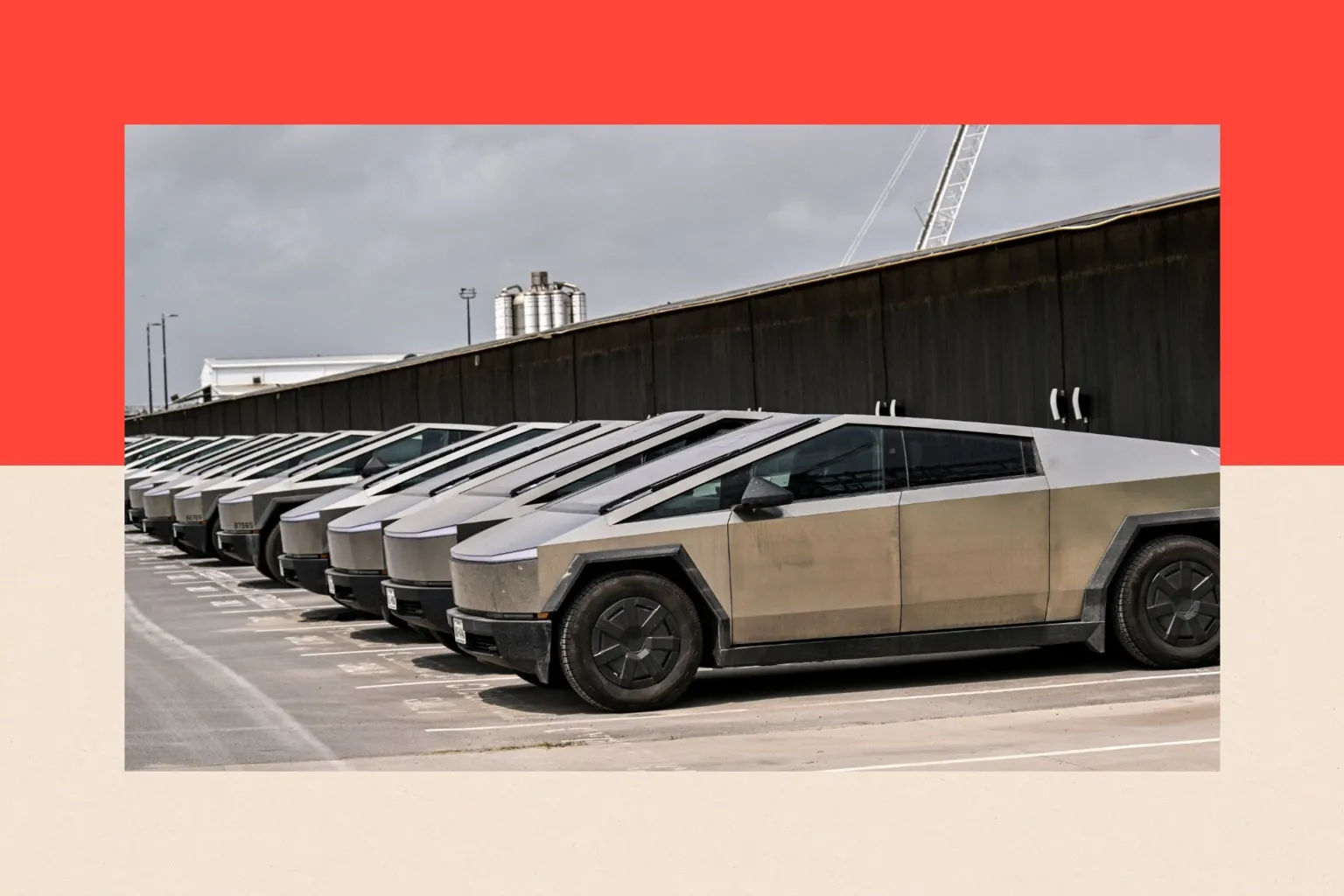
Some investors hesitate to participate in Musk’s latest venture due to his near-total control over SpaceX.
Musk holds the titles of founder, chief executive, chief technical officer, and chairman of the board.
Although he owns only 42% of the company’s shares, these come with enhanced voting rights, effectively granting him control over 85% of the company.
Financial journalist Robert Armstrong questioned:
"What is holding shares in a company? It's ownership - but what kind of ownership is this? Do you really own something you can't control?"
"I want to pay less for a company where my ownership does not include control."
Nonetheless, as one major institutional investor told the BBC:
"The cult of Elon Musk requires disciples to pay a premium for the questionable privilege of having no real say in how the company they own is run. But people seem happy to do that."
This control rests with a man who has wielded his power and wealth controversially. He spent nearly $300 million supporting Donald Trump’s second presidential campaign, secured billions in US government contracts, and engaged in the internal politics of other nations by backing right-wing figures in the UK and elsewhere.
The Musk Effect
Betting against Elon Musk has historically been unwise. He did not become the world’s richest person — with a personal fortune exceeding $700 billion and soon to surpass $1 trillion — without defying critics.
Since 2020, SpaceX’s estimated valuation has soared from $40 billion to $1.75 trillion — a more than 40-fold increase — while Tesla’s share price has increased tenfold in the same period.
This growth has occurred even as Tesla’s vehicle production has plateaued.
The continued rise in Tesla’s share price despite flat sales reflects Musk’s talent for setting ambitious new goals to justify valuations — such as his recent promise to pivot toward robotics, aiming to produce one billion humanoid robots.
One prominent investor described Musk as:
"More [the famous showman] P.T. Barnum than Rockefeller or Buffett."
Another Dot-Com Boom?
Fear of missing out (FOMO) strongly influences investor sentiment toward Musk. Those who doubted Tesla missed substantial gains.
The SpaceX IPO is the largest of its kind in history but is only the first in a series of major share sales from companies at the forefront of the AI economy.
This influx of new shares has raised concerns about a potential repeat of the dot-com boom and bust of the early 2000s, when companies with ambitious targets but little profit history flooded the market with shares.
SpaceX is initially selling only 5% ($75 billion) of its total shares, with AI competitors Anthropic and OpenAI expected to follow suit.
Once a company sells some shares publicly, it can issue more over time, potentially leading to trillions of dollars in new shares entering the market in coming years.
This could create an oversupply that demand may struggle to absorb, potentially causing share prices to decline.
One key difference from the dot-com era is the presence of index funds that automatically purchase shares of companies included in stock market indices, which may help absorb some supply.
Anthropic and OpenAI are poised to join SpaceX among the ranks of US mega-corporations, wielding unprecedented global power and influence, and potentially unprecedented control over citizens, if their proponents are correct.
As 2024 unfolds, attention remains fixed on the SpaceX launch pad for what may be the most significant share sale in stock market history.
BBC InDepth serves as the website and app’s hub for in-depth analysis, fresh perspectives challenging assumptions, and comprehensive reporting on major issues. Emma Barnett and John Simpson curate the most thought-provoking deep reads and analysis every Saturday. Readers can for the newsletter here.



