

Remembering Marjane Satrapi
On the morning of 4 June, the news of Marjane Satrapi’s passing left me stunned and in disbelief. Despite having met her only a few times in person during my 16 years living in Paris, and having contributed to one of her books, I felt a profound connection to her work and the legacy she left behind.
Our collaboration was primarily through email correspondence, yet I always held her in the highest esteem. I admired her intelligence, her extraordinary sense of humour, and above all, her exceptional talent for visual storytelling.
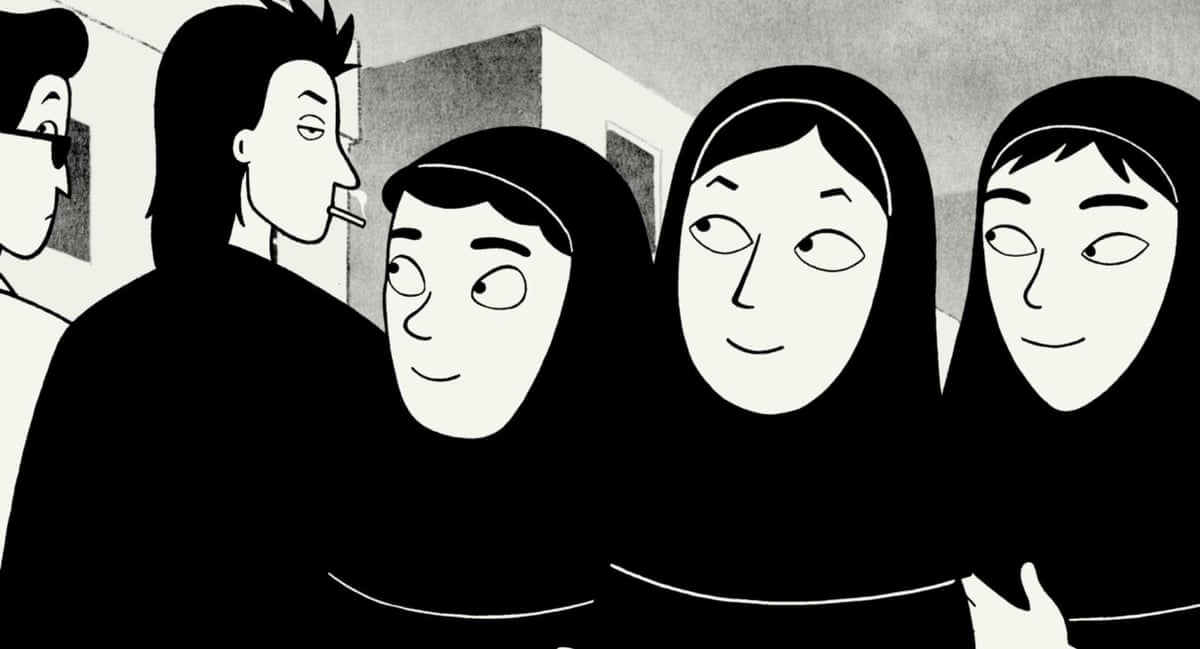
What she accomplished through drawings that appeared deceptively simple was, in truth, remarkably challenging. The black-and-white spaces on her pages, the economy of her lines, and the apparent simplicity of her compositions all served to express deeply human emotions with a clarity that few artists achieve. As a fellow cartoonist, I understand how difficult it is to attain such expressive precision while making it appear effortless.

Opening Doors for Iranian and Global Artists
Marjane did not just open doors for me; she paved the way for many Iranian comic book artists, including Parsua Bashi, Mansoureh Kamari, Majid Bita, and Shaghayegh Moazzami, among others. More broadly, she created a path for artists from smaller and less visible countries within the comics world—artists with personal stories to tell whose voices were often overlooked.
With Persepolis, she gave Western publishers the confidence to invest in our work. Many of us owe part of our careers to the space she created.
Reflecting on Her Work and Spirit
After absorbing the news of her death, my thoughts turned to Chicken with Plums, my favourite among her books. I recalled its protagonist, Nasser Ali Khan, whose cherished instrument is broken, leading him to remain in bed until death arrives. In his final days, he even refuses his favourite dish, chicken with plums. Looking back now, the character seems almost like an extension of Satrapi’s own sensitive spirit, perhaps even an unconscious premonition.
I find myself thinking of Marjane, her final days, and whatever instrument may have been broken within her. Each time, my eyes fill with tears.
Tribute from an Iranian Cartoonist
"I know how difficult it is to reach that level of expressive precision while making it look effortless."
"Many of us owe a part of our careers to the space she created."
"The black-and-white spaces of her pages, the economy of her lines, the apparent simplicity of her compositions – it all served to convey profoundly human emotions with a clarity that few artists ever attain."


