

Introduction
Evonne Goolagong won seven grand slam titles, was ranked world No 1, and challenged tennis icon Billie Jean King. However, this well-intentioned yet occasionally sentimental drama repeatedly depicts her as a child practicing tennis against a wall with a plank of wood, raising the question of whether such scenes were necessary in such frequency.
Goolagong begins with the soulful voice of Ann Peebles singing:
“It’s your thing – do what you wanna do!”This choice of soundtrack feels somewhat obvious for an inspirational sports drama as Australia’s Evonne Goolagong, portrayed by Lila McGuire, prepares for her first Wimbledon match. For those unfamiliar, Goolagong was the first Aboriginal player to compete at Wimbledon, tennis’s most prestigious tournament. She went on to win the ladies’ singles title twice, in 1971 and 1980, as well as a doubles title in 1974. Overall, she secured seven grand slam victories and was ranked world No 1 for a period.
This three-part drama from Australia’s ABC occasionally veers into saccharine territory. The opening scene, featuring a teenage Evonne wandering starry-eyed through the All England Club’s corridors, lined with portraits of former champions, feels heavy-handed. While more complex themes emerge as the series progresses, Goolagong remains largely an unapologetic, flashback-heavy homage to a sporting icon. The portrayal is beautifully crafted, but one might question the necessity of repeatedly showing primary school-aged Evonne (played by the cherubic Eloise Hart) hitting a ball against a wall with a plank of wood.
Challenges and Controversies
Unfortunately, as a woman in sport—and perhaps simply as a woman—Goolagong’s career was marred by financial abuse and sexual harassment from her coach, Vic Edwards. The contrast between the lighter scenes and the unsettling advances of Marton Csokas’s portrayal of Edwards is stark and jarring. This is especially pronounced when the narrative depicts Edwards relocating Goolagong from her content but impoverished Wiradjuri family in rural Barellan, New South Wales—a town with a population of only a few hundred—to his family home in Sydney when she was 14. This move was ostensibly to groom her for sporting success but also suggests grooming in a more troubling sense. 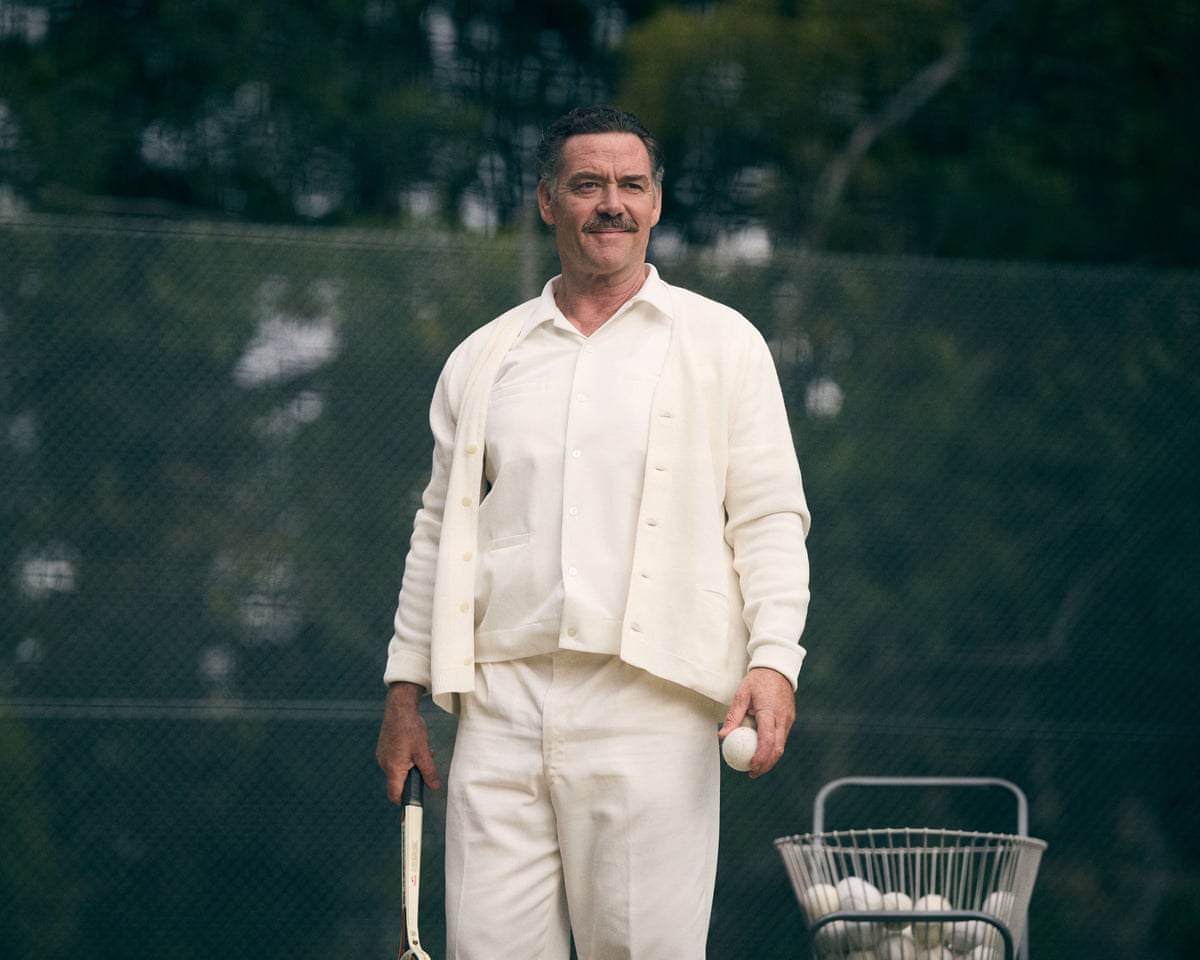
Despite the discomfort of this tonal shift, it reflects her reality. Her mother’s words,
“When it stops being fun, come home,”carry significant foreshadowing. Later, following family tragedy and Edwards’s manipulations, Evonne echoes this sentiment herself, declaring that tennis is
“not fun any more,”a sport ruined by her mentor’s selfishness.

Social Issues and Performance
The series effectively incorporates the broader social issues that overshadowed tennis in the 1970s, including discussions on race, gender, and pay equity, without merely rehashing Goolagong’s Wikipedia biography. McGuire delivers a convincing performance as the naive newcomer who, while not unfeminist, inadvertently alienates herself by telling a journalist she would play for free if necessary. This remark deeply displeases Billie Jean King, resulting in Goolagong’s ostracism by her fellow female players.
Cast and Character Portrayals
Although some scenes are overly sentimental, the performances of Eloise Hart, Lila McGuire, and Rilee Clarke—who portray Goolagong at various stages of her life—anchor the series with authenticity. The supporting cast is equally strong, notably Luke Carroll as Goolagong’s father, Kenny, and Chenoa Deemal as her mother, Linda. The series also explores the trans-hemisphere romance between Evonne and English tennis journalist Roger Cawley, played by Felix Mallard, who would later become her husband. This relationship is portrayed with warmth and charm. However, Vic Edwards’s antagonism is highlighted by allegations that he falsely claimed he was not invited to their wedding and unilaterally announced Evonne’s retirement.
Despite these compelling elements, Goolagong struggles with tonal consistency. The drama is often charming but also frequently lightweight. The climax of the final episode, depicting Goolagong’s return to tennis just months after the birth of her daughter Kelly in 1977, is prolonged with tension that feels somewhat forced. This leads to a miraculous recovery, a family reunion, and her joyous second Wimbledon victory, followed by yet more flashbacks.
Conclusion
Goolagong is an uneven production, though it tells a story that unquestionably deserved to be brought to the screen. The series concludes with a slideshow of images of the real Evonne Goolagong, reinforcing the impression that a documentary or docudrama format might have been more effective. Viewers learn that she now supports a new generation of talented Indigenous children through her tennis charity, encouraging them to dream, believe, learn, and achieve. Evonne and Roger have been married for 51 years. A brief clip shows her alongside McGuire, waving to a crowd of extras, which is notably moving. While not a groundbreaking drama, Goolagong is a heartfelt and lovely tribute.
Goolagong aired on BBC Four and is currently available on .


