

Discovering LS Lowry Beyond Matchstick Men
LS Lowry’s art extends far beyond his iconic matchstick figures. Visiting his hometown reveals how his legacy contributed to transforming a neglected dockland into the vibrant creative district of Salford Quays.
My grandmother once had a print in her downstairs toilet depicting a street scene with over a hundred people, some dogs, and mills in the background. I appreciated the work because I could relate to it in a way I never did with paintings of fruit or water lilies. Since then, I have held a fondness for Lowry, and to commemorate the 50th anniversary of his death, I embarked on a Lowry-themed trip to Manchester.
Encountering Lowry’s Art in Manchester
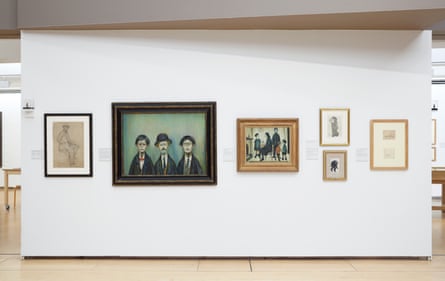
My first destination was the Manchester Art Gallery on Mosley Street, where several of Lowry’s paintings are displayed alongside works by his mentor, the French impressionist Pierre Adolphe Valette, with whom Lowry studied evening classes while employed as a rent collector.
Each painting—whether depicting a street, park, or solitary road—reflects a shared human experience. They transcend their simple forms and are more than just collections of matchstick figures. Critics often dismiss Lowry’s technique, but to me, that is akin to criticizing a beloved TV show for lacking complex vocabulary.
Finding Shelter and History in Sam’s Chop House
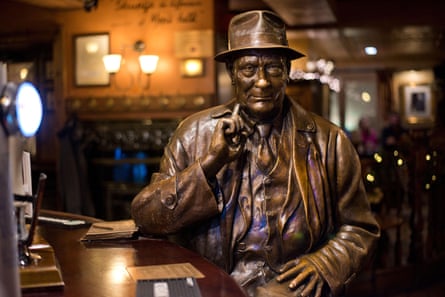
With heavy rain falling, I sought refuge at Sam’s Chop House, a pub-restaurant established in 1868, tucked away down an alley off Cross Street. This venue was a favorite haunt of Lowry, immortalized by a bronze statue of him seated at the bar. Leaning against the figure, I enjoyed a pint and awkwardly attempted a selfie with the statue, though Lowry’s size exceeded the frame.
Crossing into Salford: A City with Its Own Identity
Crossing the River Irwell, I entered Salford, a city with a distinct identity rather than merely an extension of Manchester, as it is often portrayed.
Near the Irwell stands the Lowry Hotel, initially owned by Sir Rocco Forte, whose father was an enthusiast of Lowry’s work. While using the hotel gym, I noticed that the Smiths’ music was not ideal for exercising. However, a lyric from Morrissey about "strength to be gentle" resonated with me, reminding me of Lowry’s courage in focusing on everyday scenes during a period when London’s art circles demanded more elevated subjects.
A Tour with Local Legend John Consterdine
I was picked up from the hotel by John Consterdine, a local guide known for his electric black cab tours of the region, including one dedicated to Lowry. Our first stop was Southern Cemetery, Lowry’s final resting place since his death from pneumonia in 1976 at age 88. His grave is marked by a modest stone cross and adorned with paintbrushes, shared with his overbearing mother.
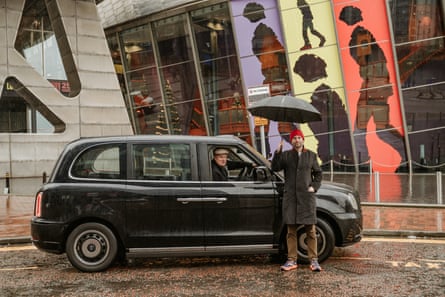
Next, we visited Victoria Park, a former gated community for middle-class Victorians where Lowry grew up. The house at 14 Pine Grove shows no indication that he lived there until age 22, when his family was forced to relocate to Pendlebury, a deprived Salford district. This move represented a significant decline in status that deeply affected Lowry’s mother.
Despite the hardship, Lowry adapted and found inspiration in Manchester’s industrial landscape, which became the subject of his distinctive, grounded scenes. The Pendlebury house at 117 Station Road remains unmarked, likely reflecting Lowry’s own wishes. Notably, Lowry declined five honors during his lifetime, holding the record for most refusals.
Salford Quays: From Decline to Cultural Renaissance
After a brief stop at Pendlebury Church, which Lowry painted multiple times, John dropped me at Salford Quays. Historically bustling with activity before the collapse of the cotton market, Salford suffered a severe economic downturn, with the docks becoming derelict and the area entering a prolonged depression, its soundtrack provided by Joy Division.

Lowry’s influence, or rather the influence of the Lowry Centre, played a pivotal role in the area’s regeneration. Conceived by Salford councillors in the late 1980s, the theatre and gallery complex opened in 2000, sparking a revitalization. London’s Imperial War Museum established a northern branch nearby; the BBC relocated to MediaCityUK, bringing new life and employment; and by 2013, ITV and Coronation Street had moved in, transforming Salford Quays into a hub for tourism, retail, housing, and leisure.
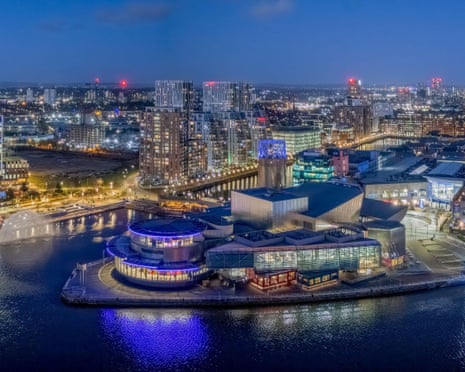
Central to this revival was the Lowry Centre, which houses an extensive collection of Lowry paintings acquired by the local council over the years.
Immersive Lowry Experience and Iconic Works
I began with a new immersive installation called "Lowry’s World." Inside a space the size of a squash court, every surface displayed Lowry’s artwork—policemen on patrol, cyclists in motion, and his signature matchstick figures—brought to life by a voiceover from Sophie Willan, star of the sitcom Alma’s Not Normal. This animation elevated Lowry’s characters to their true scale, creating an encompassing world that vividly brought his art to life.
Following the immersive experience, I viewed the paintings, which seemed more vibrant after the animation. The centerpiece was Going to the Match (1953), one of Lowry’s most famous works depicting a crowd heading to a Bolton Wanderers football game.
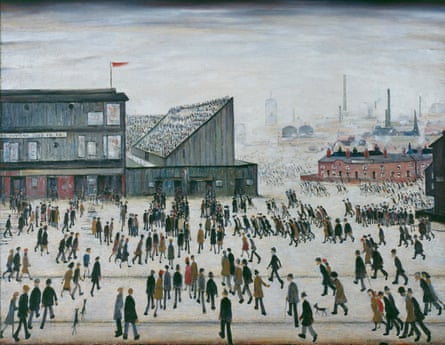
This painting has had a remarkable journey. When the Lowry Centre opened, it was loaned long-term by the Professional Footballers’ Association (PFA). Two decades later, the PFA unexpectedly requested its return to auction it. The Lowry Centre feared losing this prized piece permanently.
Enter Andrew Law, a state school graduate from Stockport and CEO of a global hedge fund, who wrote the Lowry a blank cheque to acquire the painting.
Someone should buy that man a shandy!
The gallery’s collection is comprehensive, featuring mills, streets, churches, parks, a girl in a corset, and seascapes. Contrary to popular belief, Lowry was not limited to a single motif. Each painting offers a unique perspective.
Experiencing Football and the Cityscape
That evening, I attended a Manchester United home game against Bournemouth at Old Trafford, known as the "Theatre of Dreams." I positioned myself behind the East Stand, joining a growing crowd of children on shoulders, scarf vendors, and police officers along Matt Busby Way.
Without a ticket, I retreated to a nearby pub within earshot of the stadium. After the match, I climbed to a vantage point to gaze towards the Salford and Manchester skyline.
The view was striking: the skyscrapers of Deansgate, the illuminated cluster of MediaCity, and the darkness punctuated by countless northern lights. Not a chimney was visible, yet I imagined Lowry would have captured the scene beautifully, perhaps adding figures such as window cleaners harnessed high above, braving the elements, polishing glass, enhancing perspective, and allowing others to see.
Travel Information
This trip was supported by the Lowry Hotel, offering doubles from £162 room-only. For inquiries about John Consterdine’s tours, visit his website. Both the Manchester Art Gallery and the Lowry Centre offer free entry.


