

David Hockney, revolutionary British artist famed for his pools and portraits, dies aged 88
David Hockney, the Bradford-born painter renowned for his sunlit depictions of California and his continual innovation, has died aged 88. Over a career spanning six decades, he became one of contemporary art’s most significant figures.
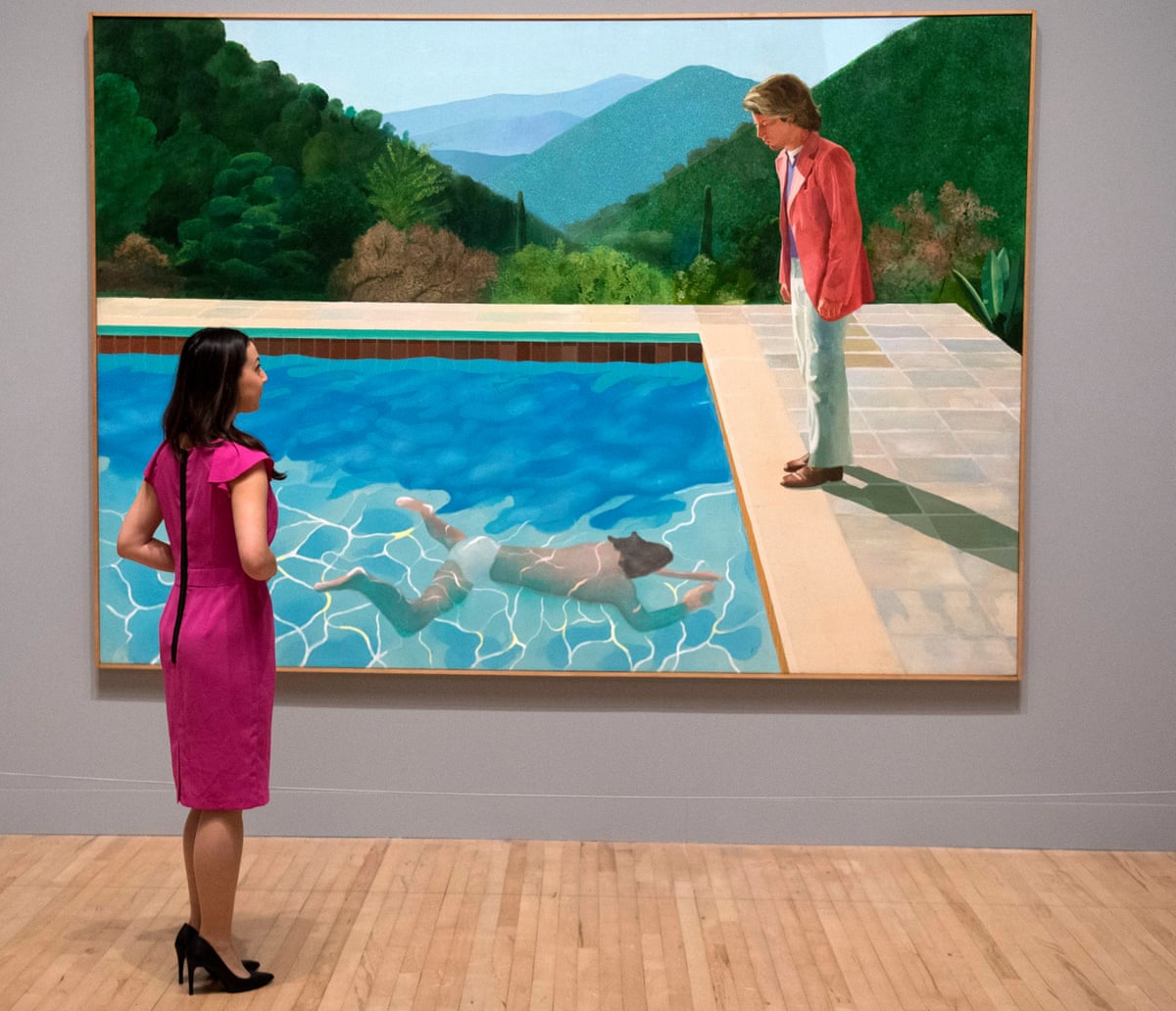
He first gained prominence as a pop artist during the 1960s, becoming especially known for his paintings of swimming pools that helped define the era’s aesthetic. Iconic works such as A Bigger Splash and Portrait of an Artist (Pool With Two Figures) portrayed scenes of love, desire, and loss beneath the bright skies of Los Angeles.
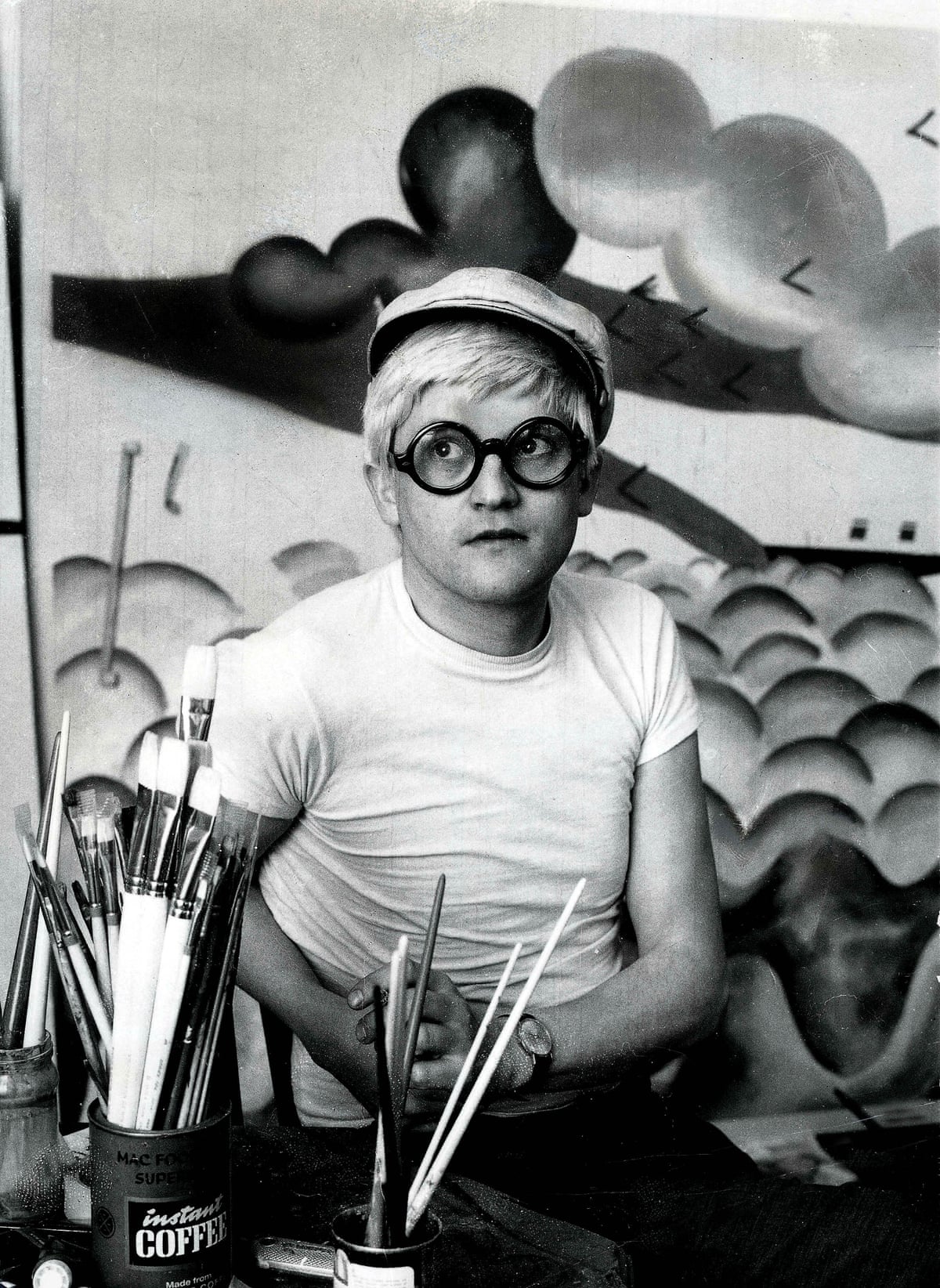
However, Hockney’s extensive career cannot be confined to a single period. He created perspective-altering portraits using photo-collage techniques, explored abstract landscape painting, and in later years embraced emerging 3D technology to produce innovative artworks.
Artist Tracey Emin expressed her admiration, stating:
“A great artist and a wonderful man, who with the power of art changed the perception of Britishness. A proud chain-smoking homosexual, who flew the flag higher than any other British artist.”
UK Prime Minister Keir Starmer was among the first to pay tribute. A spokesperson said:
“The prime minister is saddened to hear of the death of David Hockney, one of Britain’s most celebrated artists. His vivid, instantly recognisable work influenced generations of artists, and the prime minister’s thoughts are with his friends and family.”
King Charles described Hockney as a man of “irrepressible charm, talent and constant innovation.” On social media, Charles wrote:
“David was a giant of the world of art and painting, a Yorkshireman through and through, and a dear friend and inspiration to so many. David was one of life’s true originals; one who wore his genius as lightly as those beloved yellow Crocs of his that helped brighten Palace occasions. I trust they will see him tread safely into the hereafter as we mourn a man whose irrepressible charm, talent and constant innovation will be most sorely missed, but whose dazzling creativity lives on in galleries and museums around the world.”
A statement from Hockney’s representatives confirmed:
“The celebrated British artist David Hockney, one of the most important figures in contemporary art in both the 20th and 21st centuries, passed away peacefully at home on 11 June 2026, one month short of his 89th birthday. David Hockney’s enduring legacy reflects his underlying enthusiasm for life, his outstanding sense of humour, his immense generosity and his investigative curiosity encapsulated by his signature phrase: Love Life. Details of memorials will follow in due course.”
Alex Farquharson, director of London’s Tate Britain, described Hockney as an “immensely important figure.” He told the BBC:
“David was an endlessly inventive artist, with a unique vision of the world. He was always completely and courageously himself, both in his work and in life. He taught us about the joy of looking, seeing things the rest of us failed to notice – his witty and sharp observations a constant presence within his work and in person. The loss to the art world is immense: David’s passing brings to a close an extraordinary body of work characterised by reinvention.”
The Tate plans to stage a major exhibition of Hockney’s work at Tate Britain next year, alongside a multimedia installation in the Turbine Hall of Tate Modern, and will continue collaborating with his team to ensure these projects proceed.
The Pompidou Centre in Paris, which collaborated with Hockney on two landmark exhibitions, called him “unquestionably one of the major figures of contemporary art,” adding that his works remain “dazzling, alive and eternal.”
Hockney is survived by his long-time partner Jean-Pierre Gonçalves de Lima; his great-nephew Richard, who served as his studio assistant in later years; his brothers Philip and John; and numerous nieces, nephews, great-nieces, and great-nephews, according to his publicist Erica Bolton.

Early life and education
Born in Bradford, West Yorkshire, in 1937, Hockney was the fourth of five children in what he described as a “radical working-class family.” His parents nurtured his early artistic promise. He studied art at Bradford College and sold his first painting—a portrait of his father—for £10 at the Yorkshire Artists Exhibition in 1957.
As a conscientious objector, he completed two years of national service as a hospital orderly before enrolling at London’s Royal College of Art in 1959. There, he quickly gained a reputation as a unique talent with a rebellious streak. His refusal to paint a life drawing of a female model nearly prevented his graduation. Instead, he submitted Life Drawing for a Diploma, depicting a muscular male figure from an American physique magazine. He also declined to write a required essay for his final examination, believing his assessment should be based solely on his artworks. The RCA, recognizing his talent, made an exception and awarded him the diploma.
Hockney’s career began with a willingness to challenge conservative norms. His 1961 painting We Two Boys Together Clinging, named after a Walt Whitman poem, was an early indication of this. Subsequent works, such as 1962’s Cleaning Teeth, Early Evening (10pm) W11, featuring phallic Colgate tubes and chains, depicted gay life with an openness rare in a Britain where homosexuality remained illegal until 1967.
With his bleach-blond hair, round thick-rimmed glasses, and cigarette perpetually dangling from his lip, Hockney became a notable figure on the 1960s party circuits in London and the United States. He socialized with figures such as Andy Warhol, Ossie Clark, and Dennis Hopper, earning a reputation as a playboy and flâneur. Despite indulging in a hedonistic lifestyle, he maintained a strong Yorkshire work ethic. Even after suffering a stroke in 2012 that temporarily impaired his speech, he continued to create art.
Artistic evolution and achievements
After relocating to Los Angeles in the mid-1960s, Hockney’s mature and more restrained works received acclaim for conveying deep and complex emotions. Man in Shower in Beverly Hills (1964) marked his progression toward a realist style. In November 2018, his 1972 masterpiece, Portrait of an Artist (Pool With Two Figures), sold for $90.3 million (£70.2 million) at Christie’s, setting a world record for a living artist at that time. The painting, inspired by Hockney’s breakup with his lover, captivated critics, including ’s Jonathan Jones, who described it as
“a masterpiece.”
While working on one of his Los Angeles paintings, Hockney took a series of reference photographs using a camera and inadvertently pioneered the next phase of his career: photocollage, or “joiners” as he called them. By assembling multiple photographs, he explored his fascination with perspective. His portraits of his mother and British art dealer John Kasmin exhibited strong cubist influences, drawing comparisons to his idol, Picasso.
In later years, Hockney expanded into set and costume design for operas and ballets. He embraced technology enthusiastically; his art incorporated photocopiers, fax machines, printers, and iPads, the latter enabling him to create numerous digital paintings that he eagerly shared via email. Yet his technological interests remained focused on one thing:
“I’m really only interested in technology that is about pictures,”he told Interview magazine in 2013.
“I’m interested in anything that makes a picture.”
An avid smoker throughout his life, Hockney maintained that cigarettes benefited his mental health. In 2007, he called the UK’s impending smoking ban
“the most grotesque piece of social engineering.”
He returned to Yorkshire from Los Angeles in 2005. In 2013, tragedy struck when his 23-year-old assistant Dominic Elliott was found dead at Hockney’s Bridlington home. Elliott had ingested household drain cleaner after consuming recreational drugs including ecstasy and cocaine. A coroner ruled the death accidental. Hockney revealed that he had contemplated abandoning art, as he struggled to draw following Elliott’s death.
Legacy and personal views
Hockney is believed to have declined a knighthood on multiple occasions and once refused an invitation to paint a portrait of the Queen. His iconoclastic spirit was evident in his 2001 book Secret Knowledge, in which he challenged established views on how great paintings of the past were created, provoking both criticism and admiration from art historians.
He once said:
“Teaching people to draw is teaching people to look.”His art profoundly influenced perceptions of the 20th century, though he himself preferred to live in the present.
“I don’t reflect too much,”he said.
“I live now. It’s always now.”
Further reading and tributes
- Peroxide mop, statement specs, tweed suits and quirky Crocs: David Hockney’s genius for fashion
- David Hockney obituary
- David Hockney’s first English landscape on show for first time in almost 30 years
- ‘A mutual love affair’: David Hockney 25 retrospective makes a splash in Paris
- ‘David Hockney caught the look of the modern world’: a tribute to the artist whose work was a feast of visual pleasure
- Hockney says he did not offer to paint King Charles during royal visit
- David Hockney – a life in pictures
- My friend David Hockney: Martin Gayford on the prophet of painting
- Share your tributes and memories of David Hockney
- ‘I love the dog, the sandals, everything!’: eight artists on their favourite paintings in the National Gallery
Most viewed
Content related to David Hockney’s life and legacy continues to attract significant public interest.


