
Introduction to Heavy Metal Exhibition
Visitors to south Oxfordshire can experience a free exhibition showcasing sculptures by one of the UK’s most significant 20th-century artists and his contemporary successor. The exhibition, titled Heavy Metal, features striking sculptures created from salvaged steel and machinery parts reclaimed from factories, shipyards, and farms.
The setting is a picturesque slice of English countryside, complete with swifts overhead, hares along grassy paths, butterflies in the woodland fringe, an orchard, chickens, and beehives. This tranquil rural environment contrasts with the bold industrial sculptures on display.
Exhibition Venue and Philosophy
Michael Hue-Williams, director and owner of Albion Barn in south Oxfordshire, where Heavy Metal is held, expressed his preference for unconventional sculpture displays.
“I like the idea of suddenly seeing a sculpture emerge. You walk around for a while and just discover something wonderful as if by chance.”
While some sculptures are available for purchase, Hue-Williams, a prominent art dealer, invites art and nature enthusiasts to visit the exhibition free of charge by booking in advance and respecting the sculptures by not climbing on them.
Anthony Caro’s Legacy
Anthony Caro, who passed away in 2013, is regarded as a pivotal figure in British sculpture. He contributed to the design of the Millennium Bridge in London and is renowned for his innovative use of repurposed scrap metal in his artworks.
The Heavy Metal exhibition at Albion Barn features several of Caro’s notable pieces. One such work, Erl King, incorporates a large ship’s anchor to evoke the image of a medieval helmet.
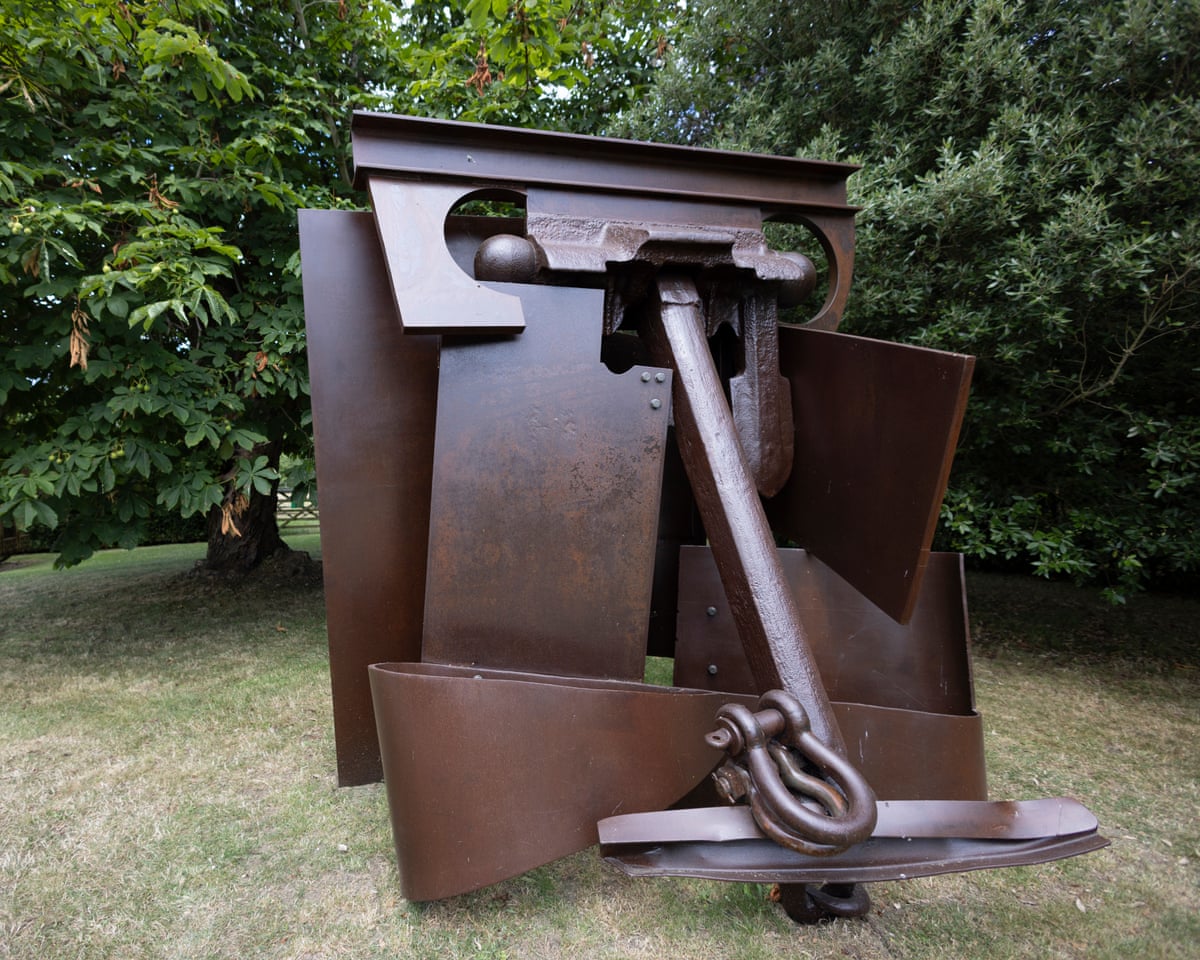
Another piece, Star Flight, is constructed from galvanised steel. Its visual impact is enhanced by the surrounding landscape: from one viewpoint, the parish church of St James forms the backdrop, while from another, the distant wooded chalk hills known as the White Horse of Uffington frame the sculpture.
A third Caro sculpture, Slow Passage, is situated near woodland close to a barn owl nest. It is made from a cattle crush, a device traditionally used to restrain cows during examination or treatment. Parts of this sculpture are painted red, which Hue-Williams noted reminded him of the abstract works of Dutch painter Piet Mondrian.
James Capper’s Contributions
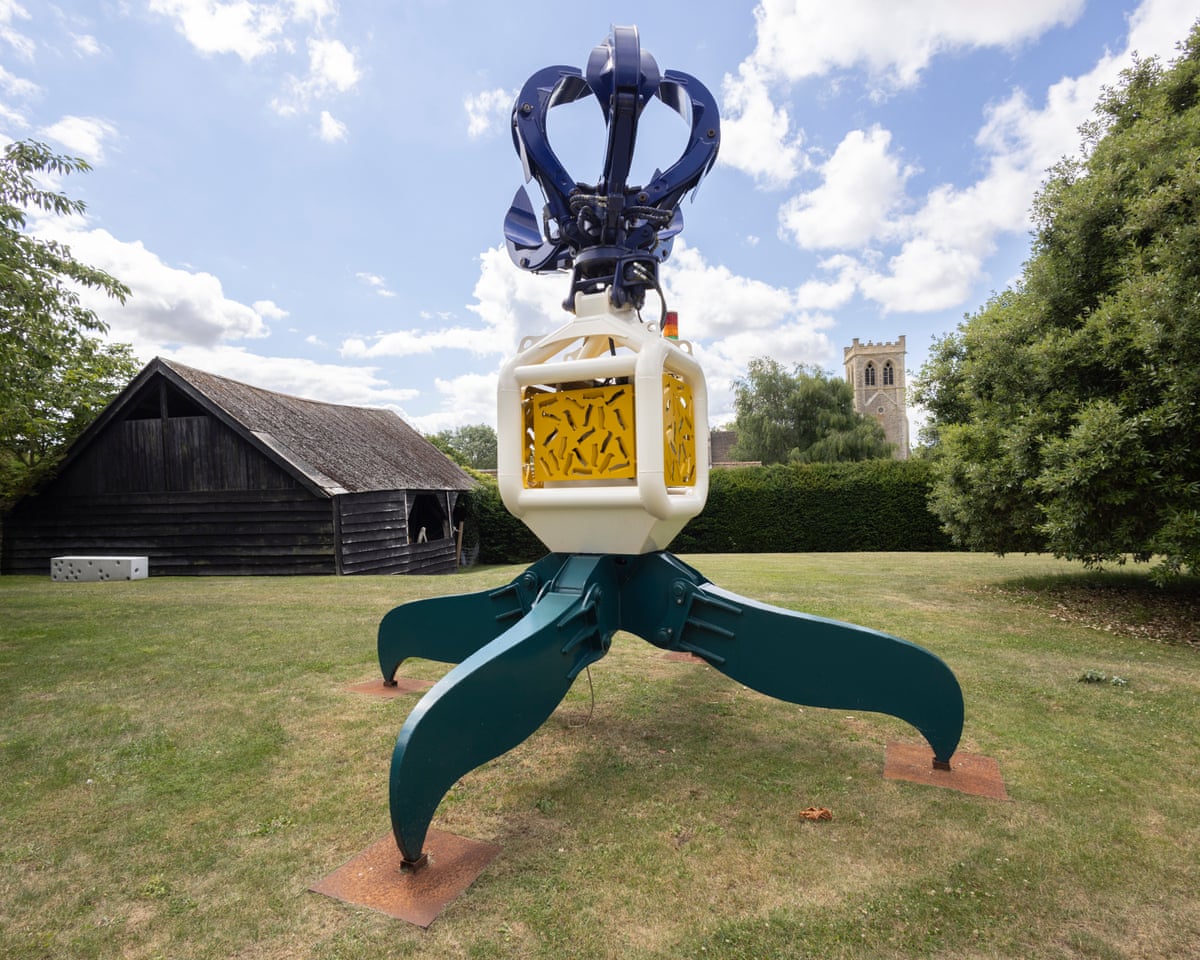
James Capper, a successor influenced by Caro, also has several pieces on display. One standout work is IRIS, which features components resembling a repurposed industrial grabber. Some elements of Capper’s sculptures are kinetic; for example, the grabber parts of IRIS open and close like flower petals.
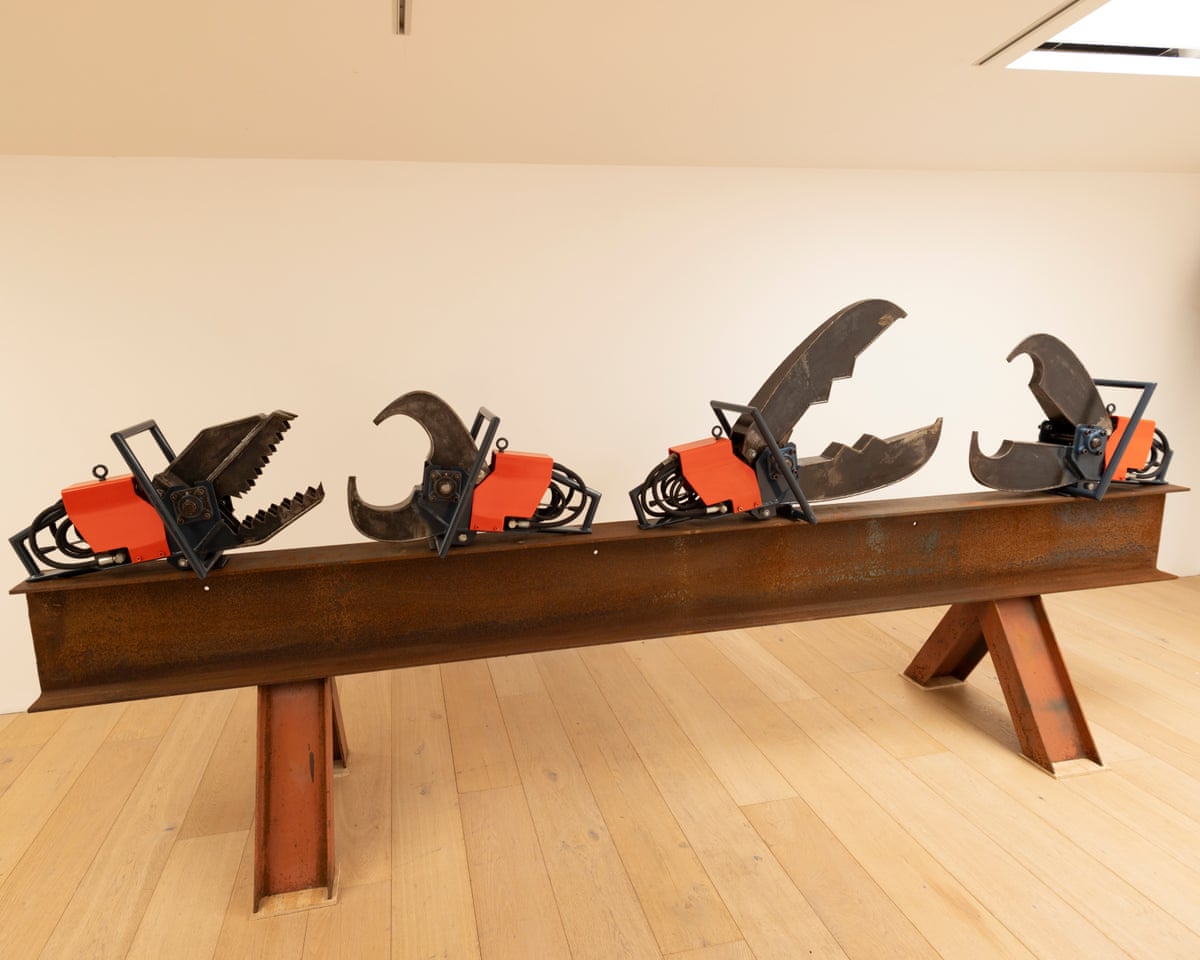
Another Capper sculpture housed inside a converted tractor barn gallery consists of two objects with sharp, nipping blades perched on a girder. These resemble stag beetles confronting each other, a piece titled Atlas from 2017.
The exhibition catalogue reveals that Capper once interviewed for a welding position with Caro. However, Caro advised him to return to his own studio and continue developing his personal sculptures. Capper followed this advice and now works from a studio located on a former military airfield in Wiltshire.
Albion Barn and Its Surroundings
The woods surrounding Albion Barn were planted by Michael Hue-Williams’ father, Giles Hue-Williams, as an early rewilding project before such initiatives became widely popular. Tragically, Giles Hue-Williams died after being stung by a swarm of bees while working in his orchard.
Despite this loss, the site remains an ideal setting for art. Visitors should note that there is no gift shop or cafe on-site; however, a nearby thatched pub adjacent to the garden wall benefits from additional patronage during exhibition days. The venue offers expansive fields and woods where sculptures emerge naturally from the landscape.
Curatorial Perspective and Visitor Information
Lucca Hue-Williams, daughter of Michael Hue-Williams and director and founder of a central London gallery, co-curated Heavy Metal. She acknowledged the unique nature of hosting an exhibition featuring such prominent artists in a rural Oxfordshire setting.
“It’s a hidden gem but I thought it was important to have an intergenerational show,”she said.
“It’s a dialogue between Anthony Caro, one of the greatest artists from the last century, and an artist whom he has particularly inspired and had a relationship with, James Capper. People can come, wander in the fields. It’s very British but fun.”
Visits to the exhibition can be booked for Thursdays and Fridays via the Albion Barn website. The exhibition is not suitable for children under 12 years old, and visitors aged 12 to 17 must be accompanied by an adult at all times.


